



New AFib treatments reduce symptoms and protect long-term heart health.
Atrial fibrillation (AFib) is the most common heart rhythm disorder, affecting an estimated 5 million Americans, according to the American Heart Association. This condition can cause a racing or irregular heartbeat, fatigue, shortness of breath, and reduced exercise tolerance.
Two advanced treatment options — Pulsed Field Ablation (PFA) and the Concomitant Ablation/Left Atrial Appendage Occlusion (LAAO) procedure — are transforming how electrophysiology cardiologists Ganiyu Oshodi, MD, and Bradley Messenger, MD, care for AFib patients at LLUMC–Murrieta.
What is Pulsed Field Ablation?
Pulsed Field Ablation (PFA) is a newer AFib treatment that uses short electrical pulses to target the small areas of heart tissue that trigger irregular rhythms. During the procedure, thin tubes are guided through a vein in the leg into the heart, where these pulses help reduce or prevent future AFib episodes.
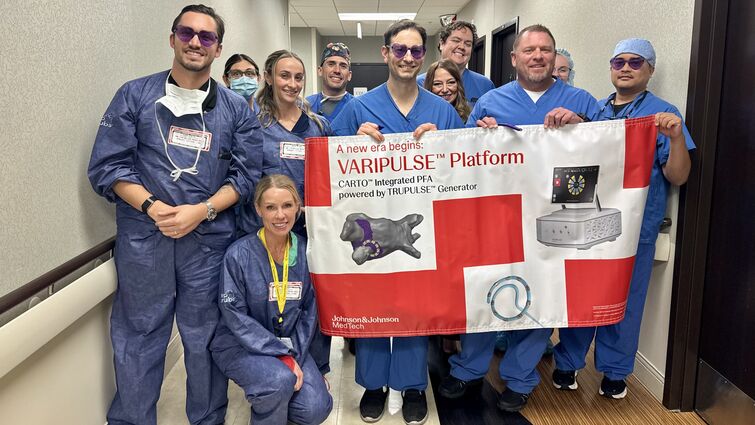
“Pulsed field ablation allows us to treat AFib with greater efficiency and less risk,” said Messenger, who led the first PFA procedure at LLUMC–Murrieta, making it the first hospital in the valley to offer this treatment. “This approach allows us to protect the surrounding tissue while effectively addressing AFib symptoms.”
PFA significantly reduces thermal effects on the tissue. While thermal methods used in traditional ablation procedures are effective, they can sometimes affect nearby structures, such as the esophagus or the phrenic nerve, which plays a role in breathing.
Messenger notes that patients with intermittent (paroxysmal) AFib have about a 75% success rate one year after a single procedure — meaning roughly 75% experience significant freedom from AFib episodes.
Who is Pulsed Field Ablation for?
Most patients with symptomatic AFib may be candidates for PFA.
“This includes patients with intermittent AFib as well as many patients with more persistent forms of AFib,” Messenger said. “This allows us to offer a treatment that is just as effective as traditional ablation but with an improved safety profile that better protects the structures around the heart.”
Atrial fibrillation is a chronic condition without a definitive cure, but catheter ablations, like PFA, remain the most effective therapy for reducing atrial fibrillation burden in appropriately selected patients. When successful, many patients experience fewer palpitations, improved energy, better exercise tolerance, and greater confidence in their daily activities.
What is Concomitant Ablation + LAAO?
Concomitant treatment is a combined approach that addresses two major issues in AFib: irregular rhythm and stroke risk.
Step 1: Doctors perform an ablation to stop the abnormal electrical signals that cause the arrhythmia.
Step 2: A WATCHMAN device is placed inside the heart to close off the area where most AFib‑related blood clots form.
“These clots are a major cause of stroke in AFib patients,” said Oshodi, who performed the hospital’s first Concomitant procedure. “Closing off this area allows doctors to significantly reduce this risk.”
Who is Concomitant treatment for?
According to Oshodi, this approach is designed for carefully selected patients who:
-
Have AFib symptoms that interfere with daily life
-
Face a higher risk of stroke
-
Cannot safely remain on long‑term blood thinners due to bleeding risk, prior bleeding, fall risk, or medication side effects
“Not everyone with AFib needs this combined treatment, but it can offer important benefits for the right patients,” Oshodi said.
For suitable patients, Concomitant treatment can:
-
Reduce or eliminate AFib episodes
-
Lower long‑term stroke risk
-
Allow some patients to stop blood‑thinning medications
-
Improve energy and reduce symptoms like fatigue and shortness of breath
Now, patients at LLUMC–Murrieta have access to these advanced, comprehensive AFib treatments close to home. Click here to learn more about AFib or to discuss whether you may be a candidate for these treatments.
More stories about: Heart & Vascular Murrieta Hospital milestones
Related Articles