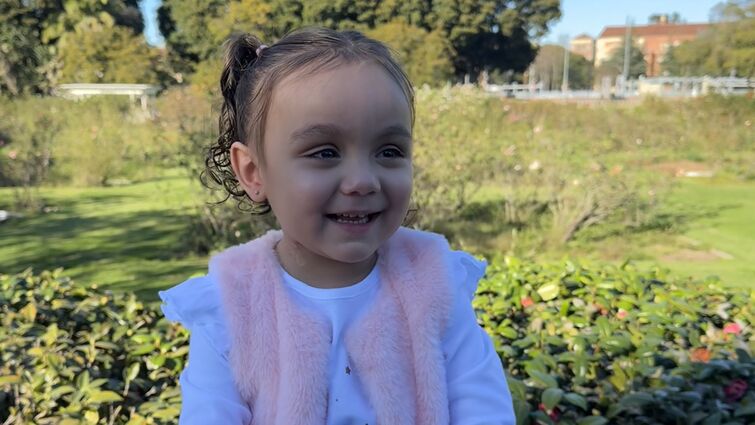
For the first two years of her life, Alaia Pacheco lived with half a heart.
She was born with hypoplastic left heart syndrome, and she had already undergone two open-heart surgeries, necessary steps in a condition that is managed, not cured.
By last fall, doctors at Loma Linda University Children’s Hospital were preparing her for the next phase of care. A cardiac catheterization was scheduled to help plan her future surgery.
Inside the catheterization lab, it quickly became clear that Alaia was sicker than anyone realized. Her fragile single ventricle could not tolerate even minor irritation. Her heart stopped.
Teams in the room, interventional cardiology, anesthesiology, and nursing, began resuscitation. CPR continued. Medications were given.
“It was one and a half hours of compressions and medications to keep her heart circulating,” said Anees Razzouk, MD, pediatric cardiothoracic surgeon at Loma Linda University Children’s Hospital.
As the crisis escalated, the response widened. The ECMO team was called. Surgeons rushed in. Cardiac intensivists prepared the Intensive Care Unit.
What had begun as a routine procedure became an all-hands-on-deck emergency.
Valeria and Alaia’s father, Emmanuel Pacheco, was called down. Then came the decision no parent expects.
Doctors explained that Alaia was at a critical crossroads and that ECMO was the only remaining option to support her failing organs. “I looked at her dad, and I’m like, is this the right kid? She was just okay two hours ago,” said Valeria.
They chose ECMO, a form of life support that temporarily replaces the function of the heart and lungs.
In Alaia’s case, placing her on the machine required rapid collaboration between surgeons, ECMO specialists, and interventional cardiologists. Alaia survived the catheterization lab. But her heart did not recover.
After days on peripheral ECMO, a form of life support where blood is taken out and returned through large blood vessels, surgeons escalated to central ECMO, placing tubes directly into her heart. It required opening her chest and could not be closed.
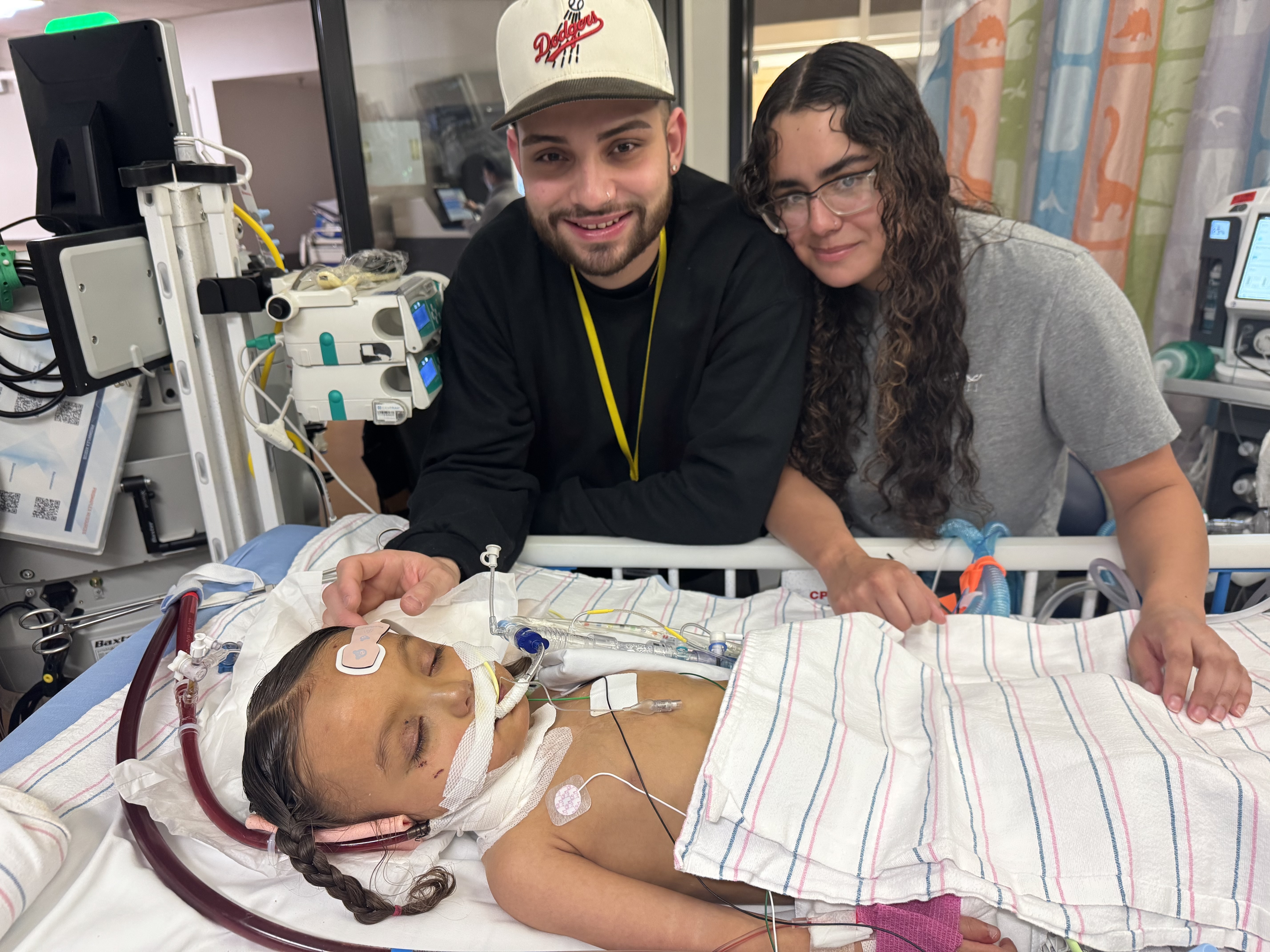
Alaia was often awake and difficult to sedate. The toddler was tethered to machines with her parents on either side of the bed holding her hands.
“She knew we were there,” Valeria said. “She was fighting every day.”
Days turned into weeks. Her kidneys failed, and dialysis began. Then her liver shut down.
“She was super yellow, almost orange,” Valeria recalled.
Only when there were signs of organ recovery could Alaia be placed on the transplant list.
Doctors across specialties monitored labs, adjusted support, and recalculated risk daily.
“She was on the list for two days,” Valeria said.
The usual wait for a pediatric heart can be months.
“The doctors told me the wait list would probably be three months,” Valeria said. “And I’m like, she doesn’t have three months. She has hours.”
On the day the call came, Valeria and Emmanuel were driving back to Loma Linda from Barstow.
The donor heart had been turned down by others, having been considered too risky for other patients.
“Nobody wanted it,” Razzouk said. “And yet that was the heart, the organ that she needed.”
The team accepted it without hesitation.
Alaia went into surgery critically ill. She came out with a new heart. Slowly, her body began to heal. Her liver recovered. Her kidneys followed. The yellow faded. She gained weight rapidly after months of malnutrition.
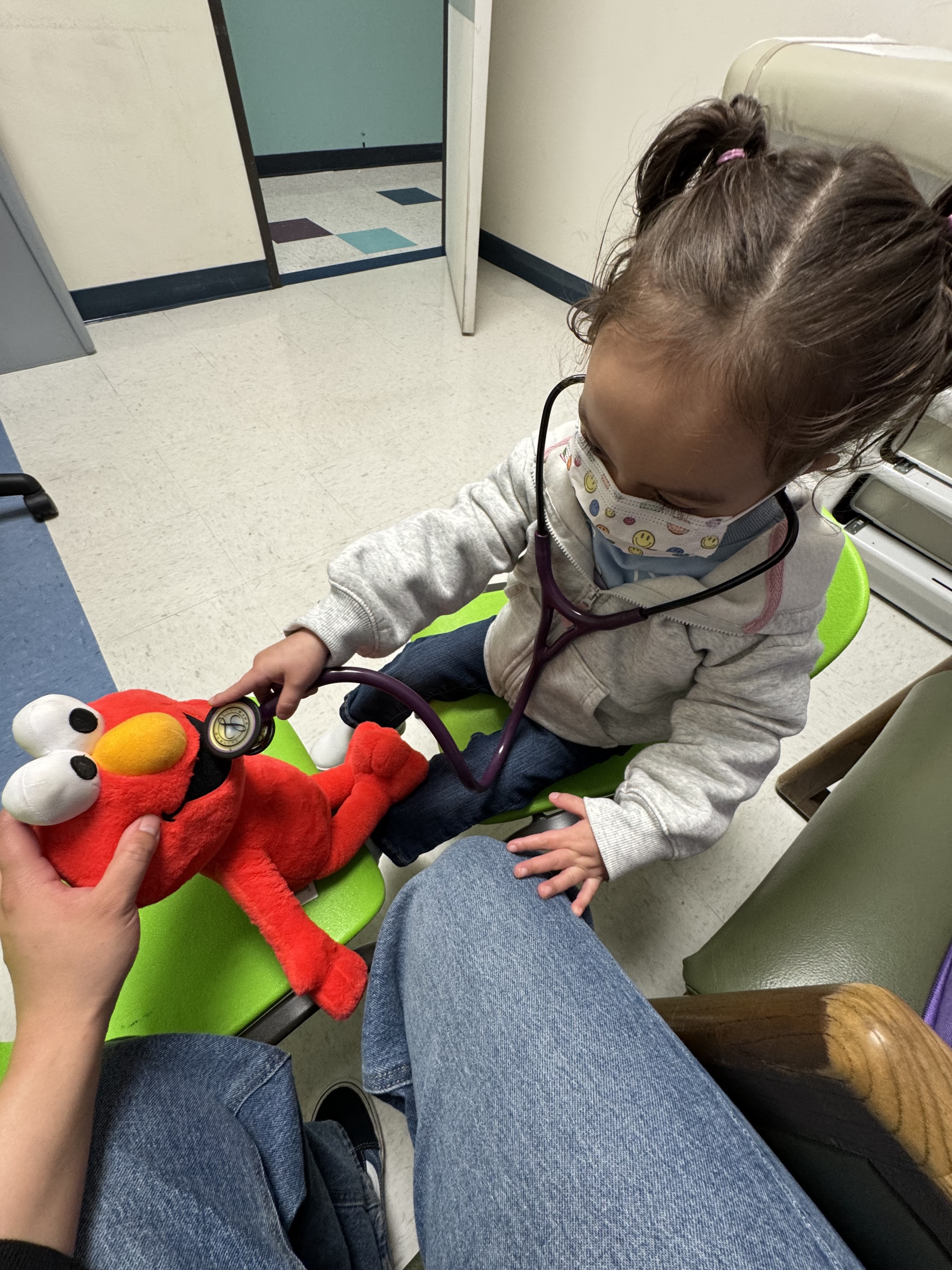
Today, Alaia looks nothing like the child whose life once depended on machines.
“She’s just the crazy toddler,” Valeria said. “She eats a lot, she’s a social butterfly now.”
The joy, Valeria says, carries weight.
“Somebody did lose their baby for Alaia to be able to live.”
Later, she learned the donor child was connected to their church.
“We met them at the boy’s funeral,” Valeria said. “We were actually able to be there, and they included us.”
The donor’s family told her their son had always wanted to be a superhero.
“So now he’s a superhero.”
Asked to describe the journey in one word, Valeria did not hesitate.
“Definitely a miracle,” she said. “I mean, this doesn’t happen.”
Alaia is alive because many things aligned at once: parents who held on, a heart others turned away, and a medical team that came together when there was no time left.
It was never about a single doctor. It was everyone.
Loma Linda University Children’s Hospital has been ranked among the Best Children’s Hospitals by U.S. News & World Report for 2025–2026 — 8th in California and 9th in the Pacific Region, with Pediatric Cardiology & Heart Surgery ranked No. 18 nationally.
Visit online for more information on cardiology & heart surgery at Children’s Hospital.
More stories about: Children’s Hospital Children's health Pediatric Cardiology Heart & Vascular Heart patients
Related Articles