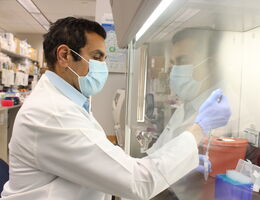

Dr. Mark Reeves acknowledges the seriousness of pancreatic cancer but wants patients to know the outlook is not what it once was.
Pancreatic cancer has long been one of the toughest cancers to detect and treat. It grows deep inside the body, often without obvious symptoms, and by the time someone feels sick, the disease may already be advanced.
Mark Reeves, MD, PhD, director of Loma Linda University Cancer Center, says progress in pancreatic cancer care is moving faster than many people expect, with major advances in chemotherapy, surgery, and radiation that are now being used together in ways that give patients options and hope they simply didn’t have before.
“We’re right in the middle of a turning point,” Reeves says. “Research funding has finally caught up to the seriousness of pancreatic cancer, and we’re starting to see the same kinds of breakthroughs that transformed treatments for breast, prostate, and lung cancer.”
Why is pancreatic cancer so difficult to detect?
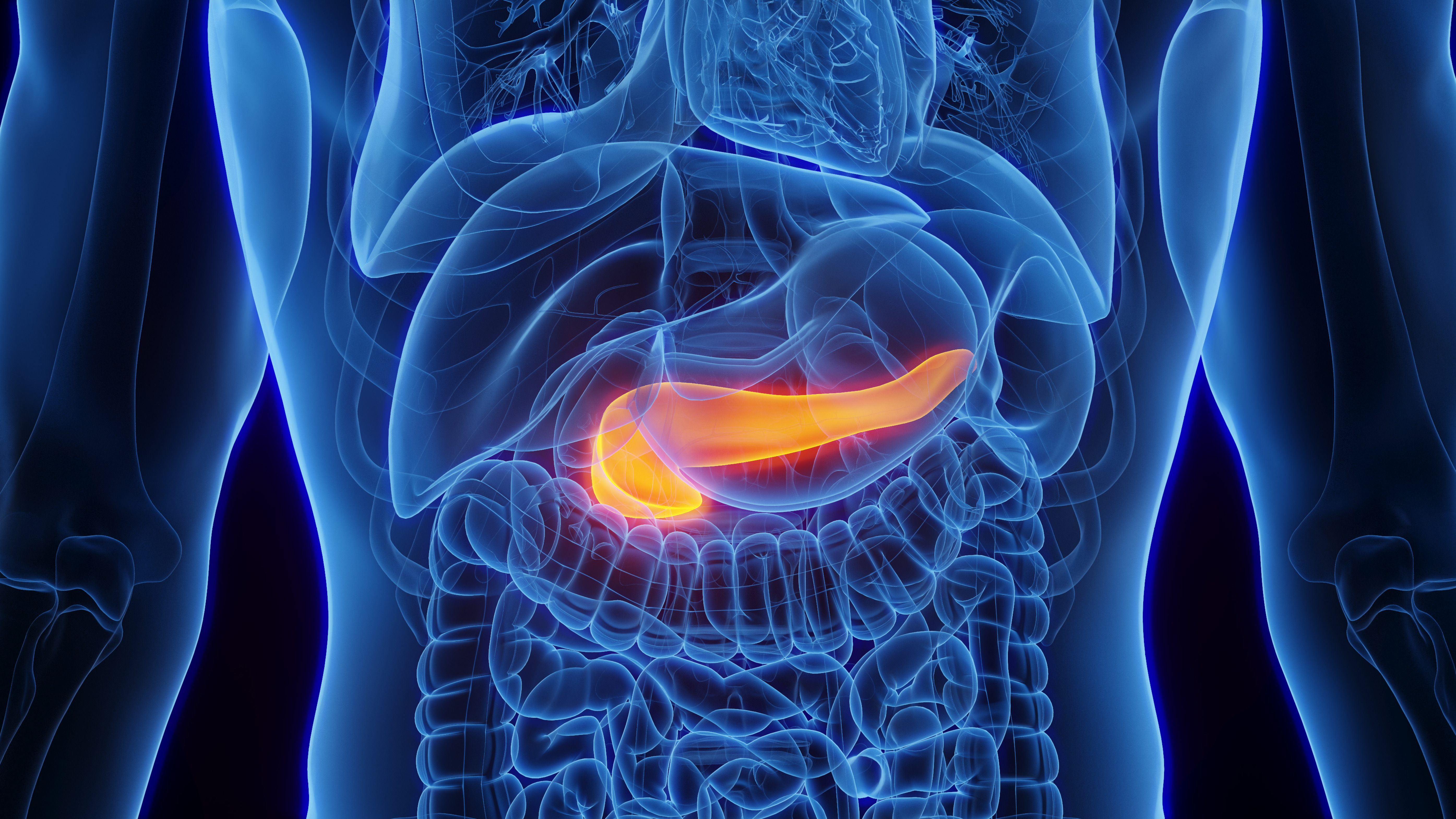
The pancreas is a small organ behind the stomach that helps digest food and regulate blood sugar. It sits so deep in the body that tumors can grow quietly without noticeable signs.
Reeves explains that pancreatic cancer is especially challenging because there is no simple screening test to catch it early. The pancreas rarely produces warning symptoms, and it is surrounded by vital structures that make surgery and radiation far more complex than with many other cancers.
Despite these challenges, new tools and approaches are steadily improving early diagnosis and treatment.
This illustration of the pancreas depicts where the small organ is in relation to the body. The pancreas sits just behind the stomach and helps digest food and regulate blood sugar.
What advancements have been made?
One major advancement is the ability to examine the pancreas without major surgery. At Loma Linda University Cancer Center, doctors use endoscopic ultrasound, which sends a tiny ultrasound device down the throat to capture detailed images.
“Twenty years ago, this technology wasn’t widely used. Today it’s completely transformed how we find and diagnose pancreatic cancer,” says Reeves.
Doctors can also study tiny samples from pancreatic cysts to look for genetic changes, an option that didn’t exist a decade ago. These breakthroughs help catch cancer earlier, when treatments are most effective. Researchers are also exploring new screening tools, including stool-based tests that look for genetic signals linked to pancreatic cancer.
What options are available?
Patients benefit from advanced treatments typically found only at large national cancer centers. These options allow physicians to treat pancreatic cancer with greater precision, fewer side effects, and more personalized care.
One of the most important surgical options is the Whipple procedure, a complex operation in which surgeons remove the part of the pancreas containing the tumor along with nearby structures, such as part of the small intestine and sometimes part of the stomach. The goal is to remove all visible cancer and rebuild the digestive system so it functions normally. It is considered one of the most demanding abdominal surgeries.
Eligible patients may receive a robotic Whipple, which uses small instruments and a robotic system instead of a large open incision.
“Most hospitals still perform this surgery through a large open incision,” Reeves says. “Our robotic Whipple program allows us to perform it with more precision, fewer complications, and a smoother recovery for patients.”
Radiation therapy is also evolving. The pancreas sits close to the stomach, liver, kidneys, and major blood vessels, which traditional radiation can affect. Proton therapy solves part of this problem by delivering radiation that stops exactly where it’s aimed, reducing damage to surrounding tissues.
“We’ve been treating cancers with proton therapy for 35 years,” Reeves says. “That experience lets us combine surgery and proton radiation in ways many centers simply cannot.”
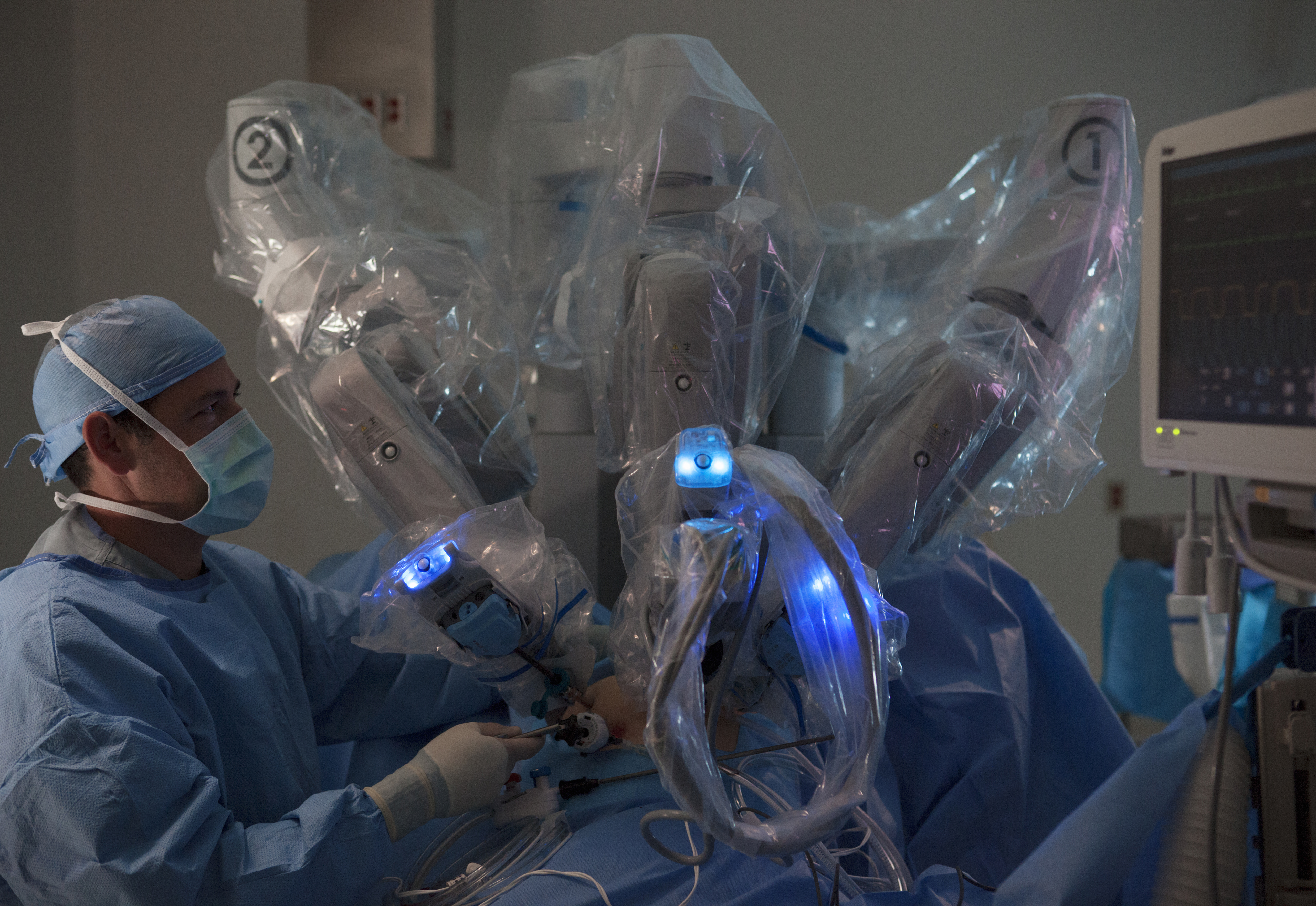
Loma Linda University Cancer Center's robotic Whipple program allows surgeons to perform a procedure with more precision, fewer complications, and a smoother recovery for patients.
What does the future of pancreatic cancer care look like?
The Cancer Center is also a major site for national clinical trials and is conducting its own research on advanced treatment combinations, such as proton therapy paired with new chemotherapy before surgery. These trials give patients early access to promising therapies not yet widely available.
In addition, the Cancer Center is exploring cell therapy and theranostics, cutting-edge approaches already proving successful in other cancers. These treatments are designed to target and destroy cancer cells with extraordinary precision, and they may play an important role in the future of pancreatic cancer care.
What makes the Cancer Center different?
Pancreatic cancer care at Loma Linda University Health is supported by a large multidisciplinary team. Surgical oncologists, medical oncologists, radiation oncologists, palliative care specialists, genetics experts, and nurses meet weekly to discuss each patient.
“This isn’t two doctors talking in a hallway,” Reeves says. “It’s 30 experts in one room looking at every angle of a patient’s case. Someone always brings up a new idea, and that can change the entire direction of treatment.”
National guidelines now recommend that anyone diagnosed with pancreatic cancer receive care from a specialized multidisciplinary team for this reason.
A pancreatic cancer diagnosis is overwhelming. Reeves acknowledges the seriousness of the disease but wants patients to know the outlook is not what it once was.
“There used to be a belief that nothing could be done. That is no longer true,” Reeves says. “Things are changing quickly. Three months from now, there may be treatment options we don’t even know about today.”
Reeves advises patients and families to seek a treatment team they trust — one with expertise, advanced technology, clinical trial access, and a compassionate approach.
What can I do now?
If you or someone you love has risk factors for pancreatic cancer, such as a family history, certain genetic conditions, long-term pancreatitis, smoking, or unexplained weight loss, don’t wait. Talk to your doctor about your risk and whether genetic counseling or screening might be right for you.
To learn more about pancreatic cancer care, clinical trials, or treatment options at Loma Linda University Cancer Center, visit lluh.org/cancer-center.
More stories about: Cancer Center Cancer patients Health Tips Primary Care
Related Articles