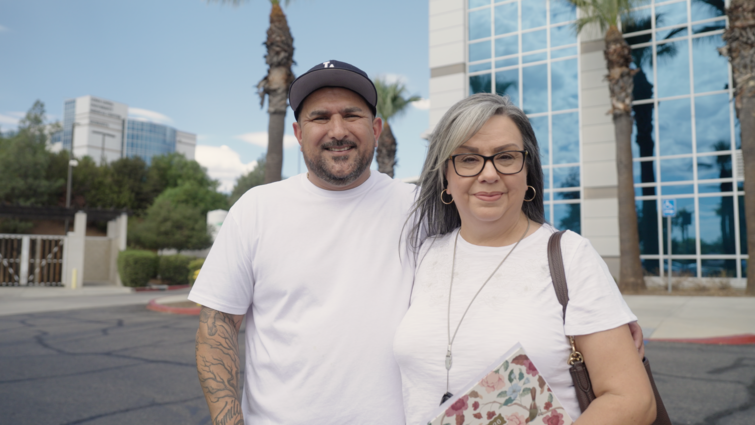
A diagnosis at stage 1A gave one patient a strong chance at recovery and a bell to ring at the end of treatment
A diagnosis at stage 1A gave one patient a strong chance at recovery and a bell to ring at the end of treatment
On June 26, 53-year-old Dolores Fernandez became the first cancer patient at Loma Linda University Medical Center-Murrieta (LLUMC-Murrieta) to ring the bell, marking her last radiation session and a milestone in her treatment.
Her diagnosis
In October 2025, Dolores stepped out of the shower to get ready like she would any other day, but this time, something on her breast caught her attention—something that had never been there before.
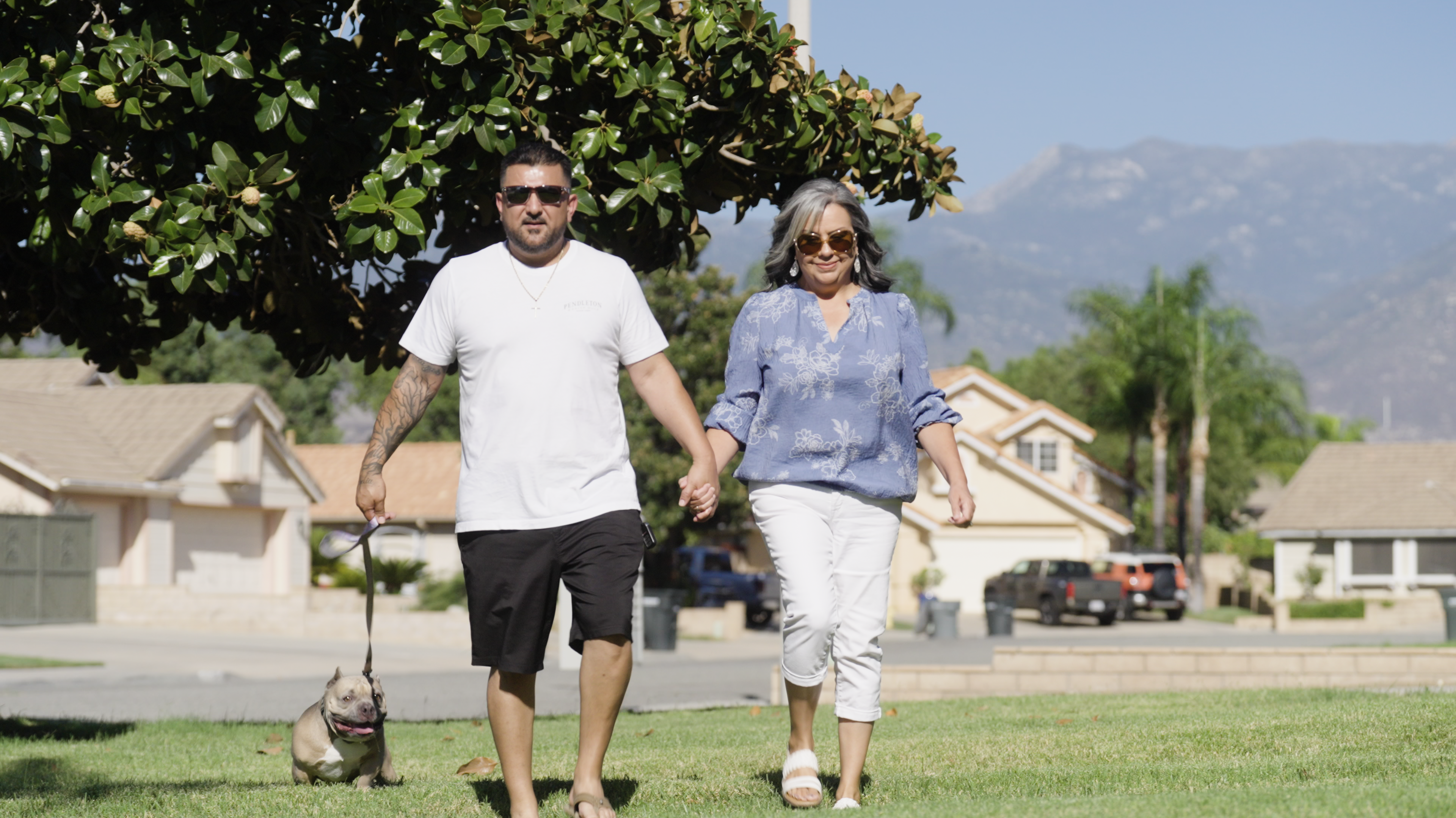
She mentioned it to her primary care provider, and in January 2026, a biopsy confirmed it was breast cancer. Eleazar Fernandez, her husband of 37 years, recalls watching the life drain out of his wife’s face as they received the diagnosis.
“I’m sitting there, looking over at my wife, and I see the life just come out of her,” he says.
“But the doctor looks at us and tells us, ‘It’s gonna be okay.’”
Her cancer was stage 1A, the earliest stage of invasive breast cancer, meaning it was entirely localized to the breast. She underwent two surgeries, a lumpectomy and a lymphadenectomy — removal of lymph nodes — to remove the cancerous tissue.
Treatment at LLUMC-Murrieta
While recovering from her surgeries, Dolores was referred to Stephanie Kwan, MD, radiation oncologist at LLUMC-Murrieta, to receive radiation therapy. After a lumpectomy, radiation is typically recommended to destroy any microscopic cancer cells that may remain.
“Radiation is used to kill those cancerous cells and sterilize the field,” explains Kwan. “This decreases the risk of the cancer coming back.”
Together, Dolores and Kwan came up with a personalized plan to treat her breast while keeping the rest of her body protected. Still, Dolores found the mental part the hardest.
“I didn’t know what to expect,” she recalls. “But in the back of my mind I’m like, ‘No, you are the strongest woman.’”
The radiation itself went better than she had anticipated, and after 10 daily treatments over two weeks, she was done. To mark the end of her treatment, Dolores rang the bell, surrounded by her loved ones.
“I was just ringing that sucker back and forth,” she says. “I was just so happy, and I felt like I rang it for myself and the ones that came before me for treatment that didn’t get to ring the bell.”
Life after treatment
The experience has changed more than Dolores and Eleazar’s outlook on life. It has changed their daily habits, too.
“We did a whole 180 on what we put into our body,” says Eleazar. “We changed what we put in our bodies, like our whole diet.”
Looking back, Dolores is grateful not only to the care team at LLUMC-Murrieta who supported her during treatment, but also to her own body. "I now understand that my body didn’t fail me, it warned me and carried me through this,” she says. “I love myself more now.”
October is Breast Cancer Awareness Month. Schedule a breast cancer screening for yourself or a loved one today.
More stories about: Cancer patients Breast Cancer Murrieta Hospital
Related Articles