This story first appeared in the 2026 Winter edition of Leaps and Bounds.
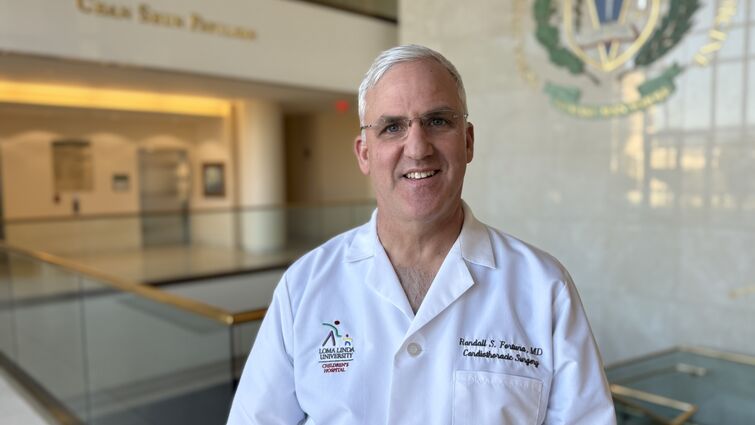
Randall Fortuna, MD, a cardiothoracic surgeon at Loma Linda University Children’s Hospital, first discovered his passion for medicine during college when a professor invited him to observe a surgery. Stepping into the operating room for the first time, he was struck by the focus, harmony, and sense of purpose among the team. “It felt like a sacred place,” Fortuna said. “I knew this was the kind of work I wanted to do.” That powerful experience, combined with his time at the University of Utah’s artificial heart research lab, set him firmly on the path toward cardiothoracic surgery.
For Fortuna, the calling was more than professional, it was spiritual. As a second-year medical student, he remembers sitting in class as a pediatric heart specialist lectured. The same reverence he had felt in the operating room returned, and he knew with certainty where he was meant to serve. “I have always believed that God has a mission for each one of us,” he said. “For me, pediatric heart surgery was the clear direction.”
The road to that calling took 14 years of intensive training. After earning his medical degree at the University of Utah, Fortuna completed five years of general surgery training at St. Louis University, three years of cardiothoracic surgery training at Loma Linda University Health, and a final fellowship year at the Hospital for Sick Children in Toronto. Along the way, he was guided by mentors such as Aness Razzouk, MD, senior pediatric cardiothoracic surgeon at Loma Linda University Health. “Watching him pause to pray with patients and families before surgery has always inspired me,” Fortuna says.
Today, Fortuna is part of the nationally recognized pediatric heart team at Loma Linda University Children’s Hospital, ranked among the top 10 programs in the country. His days begin with multidisciplinary rounds to discuss patients recovering from surgery or preparing for procedures. Most of his time is spent in the operating room repairing congenital heart defects such as ventricular septal defects, Tetralogy of Fallot, or performing complex reconstructions for newborns.
The most rewarding moments, he says, are when a surgery transforms a child’s life. “When a blue, cyanotic baby becomes pink after surgery, the change is dramatic. Seeing relief and joy on parents’ faces is why we do this work.”
Outside of the hospital, Fortuna finds balance through family and nature. He and his wife, Julie, raised seven children during his years of training, and now enjoy their growing family of grandchildren. He also enjoys hiking, biking, and swimming, recharging for the life-changing work that awaits him each day.
More stories about: Children’s Hospital Children's health
Related Articles