
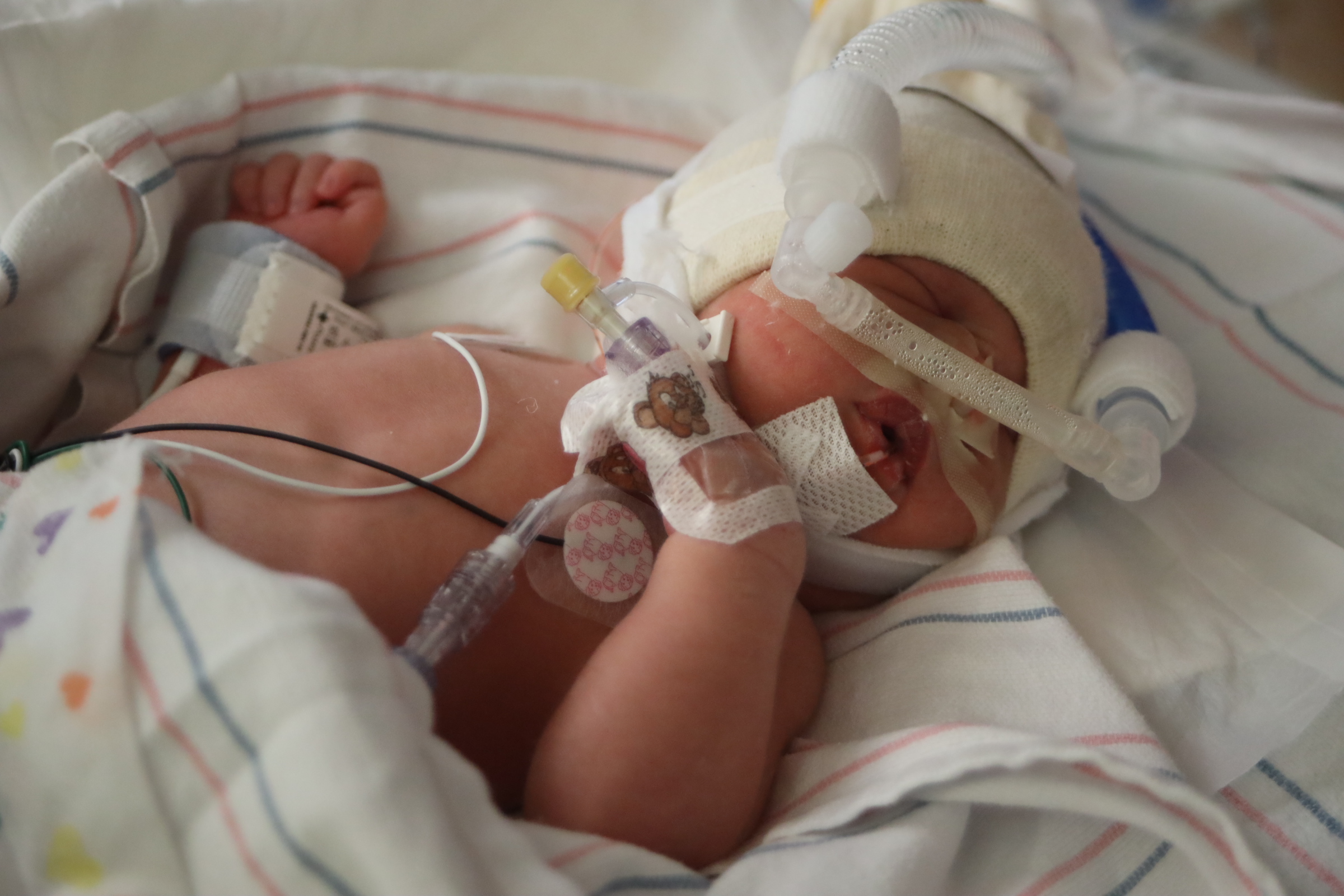
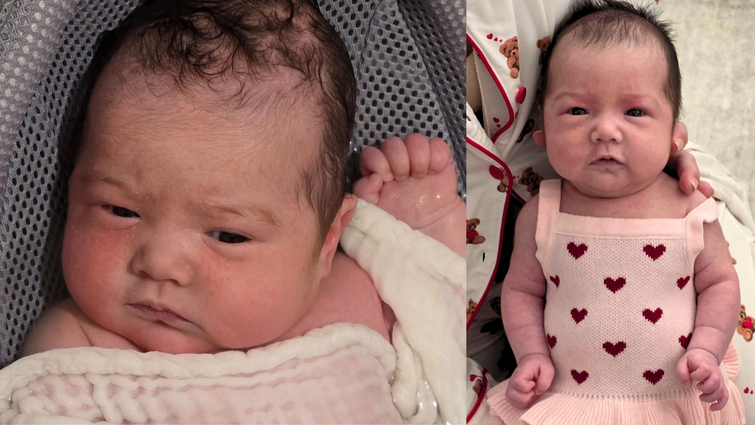
Josephine spent her first days of life in the hospital’s NICU, where a team of specialized physicians, nurses, and respiratory therapists monitored her growth and supported her development.
Just a couple weeks after arriving early as the hospital’s first baby of the New Year, a tiny fighter went home with her family thanks to the care of the neonatal intensive care unit (NICU) team at Loma Linda University Children’s Hospital.
Baby Josephine Rose McGillicuddy, who made headlines as one of the first babies born in 2026, arrived at 1:30 a.m. on January 1, to proud parents of Riverside, California. Born unexpectedly at 33 weeks in the San Manuel Maternity Pavilion, Josephine’s early arrival meant she needed specialized care to support her development during her first days of life.
Premature babies often face many challenges as their bodies continue developing outside the womb. According to Nicole Kraus, DO, neonatologist and medical director of the NICU at Loma Linda University Children’s Hospital, breathing support is one of the most common needs for babies born several weeks early.
“Some of the biggest challenges in the initial period is trying to make sure that they are breathing on their own,” Kraus says.
Babies born prematurely may need extra help because their lungs and other systems are still maturing.
“A couple of things are involved, including lung immaturity and whether they have enough surfactant to keep their lungs open and working properly,” Kraus says. “Sometimes they also forget to breathe because their nervous systems are still developing.”
Josephine spent her first days of life in the hospital’s NICU, where a team of specialized physicians, nurses, and respiratory therapists monitored her growth and supported her development.
During that time, doctors carefully watched for important milestones that signal a premature baby is ready to transition home, including the ability to breathe independently, maintain stable body temperature, feed consistently, and steadily gain weight. These milestones help ensure premature infants are strong enough to continue growing and thriving outside the hospital.
Baby Josephine Rose on her first day of life in the NICU.
For families, the NICU journey can feel long and uncertain, but Kraus says patience and support are key. “Even though it’s a long journey, once they get so close to the end, sometimes that part can seem like forever, but they will get there, and they will get home,” Kraus says.
Two weeks after her early arrival, Josephine reached that milestone.
Her parents say bringing their daughter home was an emotional and joyful moment after weeks of watching her grow stronger each day.
“We are so thankful for the incredible care Josephine received from the NICU team,” her parents said. “Seeing her grow bigger and stronger every day has been amazing, and we are so happy to finally bring our baby girl home.”
Moments like these are meaningful not only for families, but also for the care teams who support premature babies through their earliest days.
“Josephine has been such a rockstar and a fighter,” said Kraus. “Watching babies like her grow stronger every day and reach the point where they can finally go home with their families is incredibly rewarding for our entire NICU team.”
For Josephine and her parents, the new year began with uncertainty but quickly turned into a celebration of resilience, growth, and the joy of bringing their daughter home.
Loma Linda University Children’s Hospital is nationally recognized for its commitment to high-quality pediatric care and has been ranked a Best Children’s Hospital by U.S. News & World Report. The hospital provides comprehensive, specialized care for infants, children, and adolescents, including advanced heart and neonatal services designed to support even the most complex needs.
To learn more about pediatric and neonatal care at Loma Linda University Children’s Hospital, visit lluch.org.
More stories about: Children’s Hospital Children's health
Related Articles