Forensic pediatrician Amy Young, MD, explains how early reporting protects children, and why speaking up matters
Each April, communities across the country observe National Child Abuse Prevention Month, a time to raise awareness and encourage action to protect vulnerable children.
“The first thing I want people to understand is that child abuse and neglect are not rare,” said Amy Young, MD, chief of the Division of Forensic Pediatrics at Loma Linda University Children's Hospital. “More than 500,000 children across the United States experience child abuse every year.”
Young emphasizes that protecting children is a shared responsibility.
“As a community, it is our job to protect children,” she said. “If you see something, say something. If something doesn't sit right with you and you are concerned about a child's safety, make a report. You do not have to be certain about it.”
For many people, hesitation to report comes from a fear that it will automatically lead to a child being removed from their home. In reality, reports prompt an evaluation of a child’s safety, and in many cases, families are offered support and resources to help keep children safe at home. Early reporting allows concerns to be addressed before situations escalate.
“Contact law enforcement, contact Children and Family Services,” Young said. “It will be one of the things that you'll never lose sleep over when something doesn't sit right with you.”
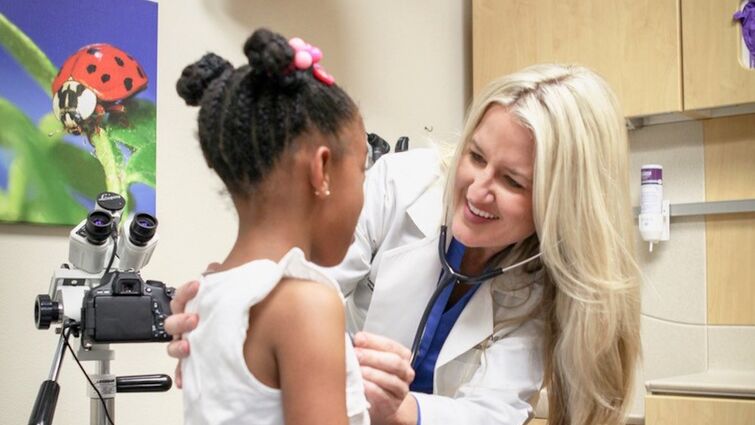
At LLUCH, physicians like Young, evaluate and protect children, particularly the youngest and most vulnerable patients who may not be able to speak for themselves.
“We see the entire Inland Empire as our community, and we work closely with law enforcement agencies and Child Protective Services throughout San Bernardino County and Riverside County to evaluate cases of suspected child abuse and to give an opinion and help protect children to keep them safe,” she said.
As a forensic pediatrician, Young’s specialty focuses on understanding injuries and determining what may have happened to a child. “A forensic pediatrician is a unique type of sub-specialist within pediatric medicine,” she said. “We focus on the evaluation of all forms of child maltreatment. In cases of suspected abuse, we conduct immediate comprehensive assessments that include gathering medical history from caregivers and, when appropriate, the child, performing detailed physical examinations, and ordering and interpreting diagnostic and laboratory studies. We then integrate these findings to determine what the medical evidence and science support regarding what may have happened to the child.”
That process helps inform next steps centered on safety.
“We then use that information to work with law enforcement and children and Family Services to protect children,” she said.
Young noted that the field itself remains critically understaffed nationwide.
“We have less than 400 doctors practicing in this sub-specialty across the entire United States,” she said.
According to the Centers for Disease Control and Prevention, strong, supportive relationships between children and caregivers play a role in a child’s safety and development. Simple, consistent actions can help reduce the risk of child abuse.
-
Setting aside time each day to talk or play
-
Establishing routines to create a sense of security
-
Validating a child’s feelings
-
Know who is supervising your child when they’re outside your home
-
Teach children how to stay safe online
-
Seek parenting support programs to strengthen family relationships
Ultimately, Young hopes more people understand that speaking up can make a life-changing difference.
If you believe a child’s safety or well-being may be at risk due to abuse or neglect by a parent or caregiver, report your concerns to your county’s child protective services agency. These 24-hour hotlines are staffed by trained social workers who can assess the situation and help ensure the child’s safety.
More stories about: Children’s Hospital Our Doctors
Related Articles