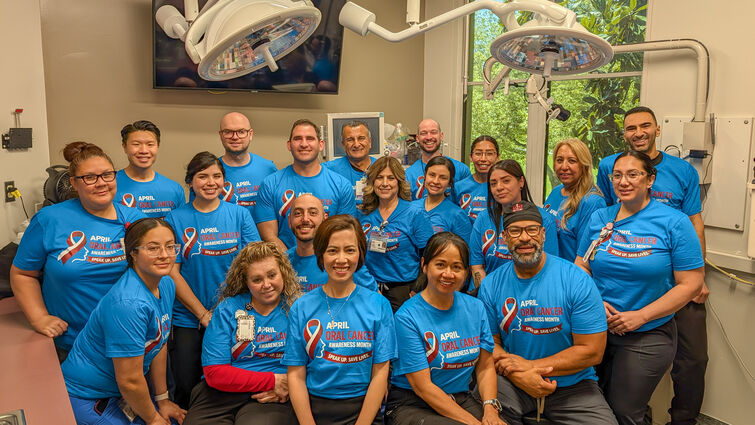
Loma Linda University Health dental clinic staff wear matching shirts in support of Oral, Head and Neck Cancer Awareness Month.
April is Oral, Head and Neck Cancer Awareness Month, a time to highlight the importance of early detection and prevention of cancers that often go unnoticed until later stages.
One place people should pay closer attention? The dentist’s chair.
When people think about cancer prevention, they rarely think about their dentist. But routine dental visits could play a critical role in catching oral cancer early, and sometimes before symptoms become severe.
“Many patients see their dentist more often than their primary care provider,” says Chi Viet, DDS, MD, PhD, FACS, oral and maxillofacial surgeon at Loma Linda University Health. “That makes dentists one of the first lines of defense when it comes to detecting oral cancer.”
Rising cases, shifting risk
Oral cancer cases have been increasing in recent years, including among younger patients without traditional risk factors like smoking or heavy alcohol use.
“A significant portion of patients I treat are otherwise healthy,” Viet says. “Because they don’t fit the typical profile, their cancer can sometimes be overlooked.”
While many throat cancers are now linked to human papillomavirus (HPV), oral cancers do not have a single clear cause, making awareness and early detection even more important.
What dentists are trained to catch
During routine visits, dentists perform head and neck exams, checking for abnormal lesions, lumps, or changes in tissue.
“Often, they are the first healthcare professional to identify something concerning,” Viet says.
Since these exams happen regularly, often every six months, they offer a valuable opportunity to detect cancer early, when it is most treatable.
Warning signs to watch for
Patients also play a role in early detection. Viet recommends seeking care for:
-
Sores or lesions that don’t heal within two weeks
-
Persistent mouth, tongue, or gum pain
-
Unusual lumps or bumps in the mouth or neck
“If something doesn’t go away, don’t ignore it,” Viet says. “Getting it checked early can make a significant difference.”
Risk factors still play a role
Tobacco and alcohol use remain major contributors to oral cancer risk, and vaping is not a safe alternative.
“These habits don’t just increase the risk for oral cancer, they increase the risk for many cancers and chronic illnesses,” Viet says.
For throat cancers, HPV is now a leading cause, making vaccination and awareness important tools for prevention.
Oral health is whole-body health
One of the biggest misconceptions is that oral health is separate from overall health. “We tend to silo medicine and dentistry,” Viet says. “But oral health directly impacts overall health.”
At Loma Linda University Health, that connection is reflected in a whole-person approach to care, encouraging prevention, regular screenings, and early intervention.
A simple takeaway
“Minimizing high-risk habits and seeing a dentist regularly are two of the most important things people can do,” Viet says. “And if something doesn’t feel right, don’t wait to get it checked.”
To learn more about cancer prevention or schedule an evaluation, visit lluh.org/cancer-center or talk with your dentist or primary care provider.
More stories about: Cancer Center Cancer patients Whole Person Care
Related Articles