

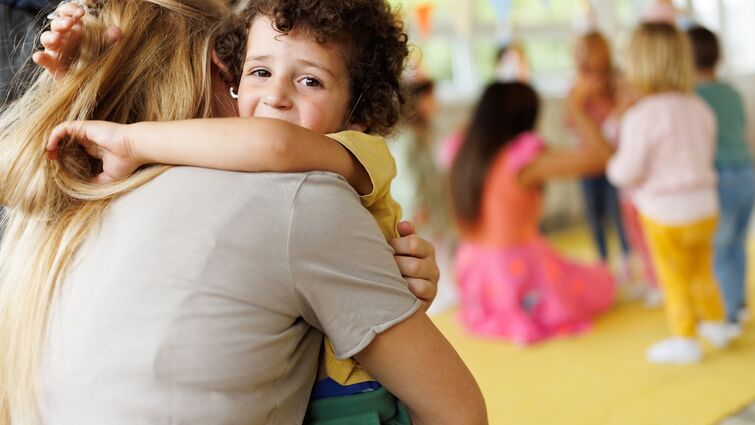
The signs of separation anxiety look different depending on the child’s age.
A baby cries inconsolably when not being held by their primary caregiver. A toddler follows their parent from room to room, not letting them out of sight. A child clings to a parent's leg at preschool dropoff. These are all classic examples of how separation anxiety shows up in children.
The fact is, separation anxiety among infants and toddlers is common and developmentally normal. It could be a sign of a healthy attachment between a parent and a child. But that does not make handling those distressing moments any easier.
Sabiha Kanchwala, MD, a pediatrician at Loma Linda University Children’s Health, said parents should know that they are not doing anything wrong if their child exhibits these behaviors. She shared four tips that can help ease those anxious moments for both the parent and the child.
1. Understand that separation anxiety is common — and can even be healthy.
Separation anxiety is common in young children and shows that they have reached a healthy developmental milestone. Between six and 12 months old, infants begin to understand object permanence, meaning they learn objects still exist even when they cannot see them. That also means they are more aware when a loved one is no longer close by, triggering anxiety. By the same token, it can also help them understand that a parent still exists even if they are not within eyesight.
The signs of separation anxiety look different depending on the child’s age.
In infants, this looks like crying or only wanting to be held by one parent. Toddlers may cry as well, but they can also have trouble going to sleep at night without a parent, worsening or increased tantrums, and trouble being dropped off at preschool or daycare.
“Parents need to know that they are not doing anything wrong if their child is exhibiting separation anxiety,” Kanchwala said. “It is often just part of growing up.”
2. Expect an increase in separation anxiety during periods of change.
Sometimes separation anxiety seems to show up or intensify out of nowhere. A child who once easily separated from their parent may suddenly melt down while been dropped off at daycare or preschool. They may no longer want to be left with a regular babysitter or grandparents. Major life changes could be the reason.
Transitions that could spark increased anxiety include the birth of a new sibling, moving homes, or the loss of a loved one or a pet.
According to a study, the birth of a sibling is not only a stressful transition, but a transition where the mother-child relationship changes. The study suggested that the increased anxiety in this situation is temporary and typically resolves once new family routines are established.
For temporary spikes in separation anxiety, Kanchwala suggests having increased compassion for your child and offering plenty of verbal reassurance.
3. Do not sneak away when the child is not looking.
Many parents naturally think stepping away when a child is not looking makes the separation easier. And while it may avoid an emotional outburst, it is not necessarily the best way to handle the situation for your child.
“I recommend not prolonging drop-offs, but also not disappearing,” Kanchwala said. “Let your child know that you are leaving but will come back to pick them up.”
In addition to verbal reassurance, Kanchwala recommends giving preschoolers a small token, like a paper heart or “kisses” they can keep in their pocket. These serve as little reminders of their parents that they can come back to when they miss them throughout the day.
4. Seek help if anxiety is severe.
Separation anxiety is largely normal in early childhood, but there are times when it may be having a more significant impact on a child’s well-being. Some children are more prone, especially when there is a history of anxiety and depression in the family.
Parents or caregivers should seek professional guidance if they feel their child is experiencing symptoms of repeated and intense distress when thinking about separation. This could include constant worry that some harm may come to a parent, not wanting to leave home because they are worried about separation, refusing to sleep without a parent nearby, or repeated nightmares about separation. A distressed child may also have repeated bodily complaints, like head or stomach aches, before being separated.
Kanchwala said, “If it is persisting into the school-age years, or worsening, it is a great idea to talk to your child’s doctor.”
If you are concerned about your child’s separation anxiety or have questions about their emotional development, our pediatric team can help. Learn more about our General Pediatrics services or schedule an appointment today.
More stories about: Children's health General Pediatrics
Related Articles