
Measles cases increase across the country, sparking public health concerns.
KEY TAKEAWAYS
- The U.S. has lost its measles elimination status after 26 years.
- Measles cases have reached their highest levels in decades.
- The virus spreads faster than almost any other infectious disease.
- Serious complications can include hospitalization, brain damage, and death.
- Staying up to date on MMR vaccines is the best way to protect families and communities.
Since the turn of the century, measles has not been a major concern in the United States. That is no longer the case.
Decreasing vaccination rates has led to a significant spike in cases throughout the country, according to the Centers for Disease Control and Prevention, causing alarm in the healthcare community and increasing calls for families to make sure they are up to date on their measles, mumps, and rubella (MMR) vaccines.
U.S. LOSES MEASLES ELIMINATION STATUS
Last week, the Pan American Health Organization announced that the U.S. has lost its measles elimination status, a designation it has held since the year 2000.
PAHO Director Jarbas Barbosa, MD, said in a news release that the announcement is about much more than losing a public health designation.
“It means the virus has circulated for a prolonged period, putting families and communities at risk of preventable illness, hospitalization and death," Barbosa said.
WHY ARE MEASLES CASES INCREASING?
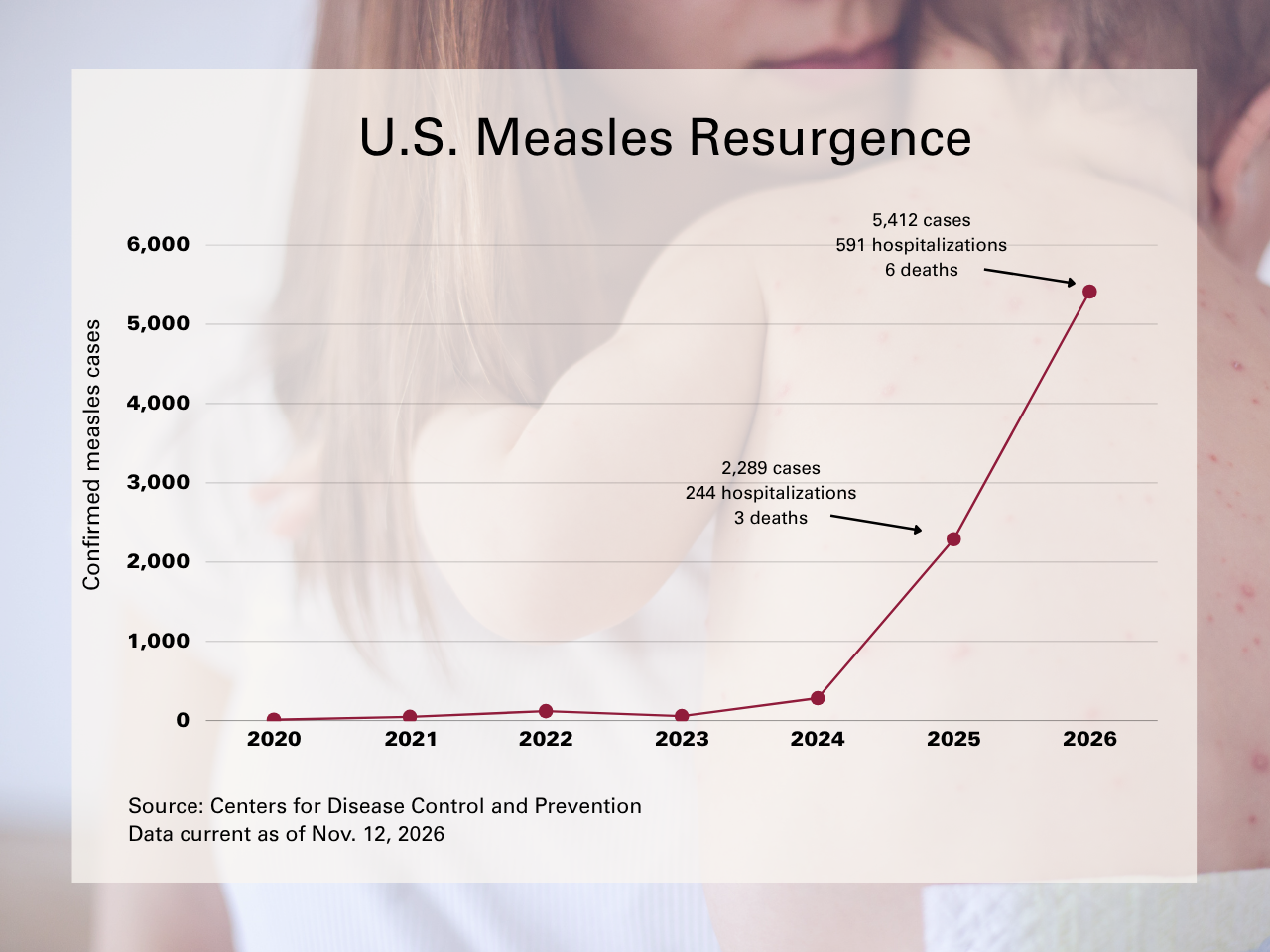
According to the CDC, more than 5,400 cases of measles have been reported in 2026 so far. That is up from 2,289 in 2025 and 285 in 2024. The last time the U.S. saw more than five thousand cases was in 1991.
Alvaro Galvis, MD, chief of pediatric infectious disease at Loma Linda University Children’s Hospital, said the reason measles cases are increasing now is because fewer people are vaccinated. To achieve herd immunity against an illness as contagious as measles, 95% of people need to be vaccinated. During the 2025-2026 school year, only 92.4% of kindergarteners had completed their two-dose MMR vaccine series, according to CDC data.
“It's kind of like we're sitting ducks for a major outbreak and major death in the pediatric population,” Galvis said.
Not sure if your child should be vaccinated against measles? Schedule an appointment with a Loma Linda University Children’s Hospital pediatrician.
WHAT IS MEASLES? TYPICAL SYMPTOM TIMELINE
Measles is not simply a rash. It is a virus that people of all ages can get, but it is especially dangerous for infants, young children, pregnant women, and other immunocompromised individuals.
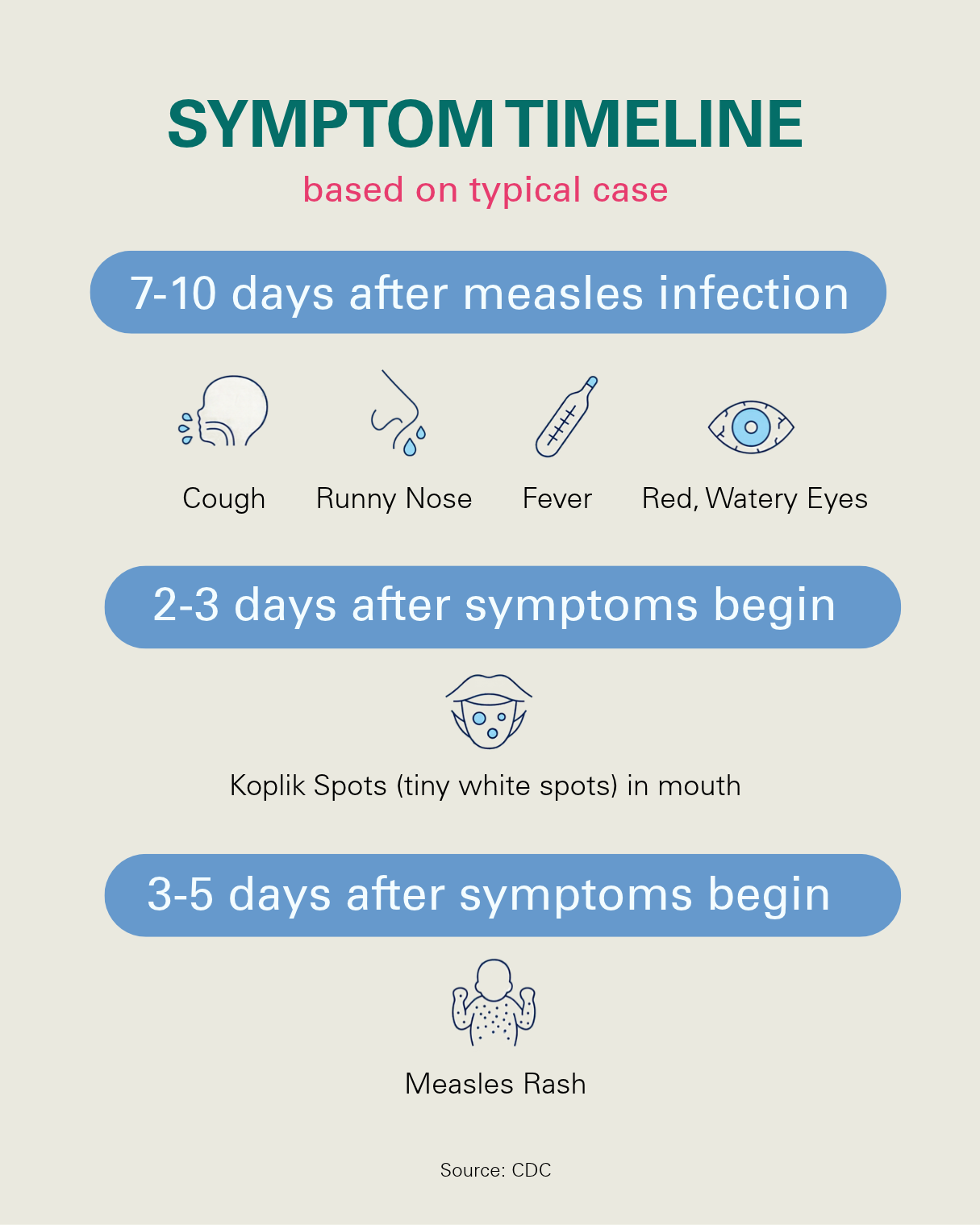
Symptoms typically begin 7-14 days after exposure and can include a high fever, cough, runny nose, and conjunctivitis, or “pink eye.” As the disease progresses, tiny white spots called “Koplik spots” may appear inside the mouth. A rash first appearing as flat, red spots along the hairline can spread throughout the body.
Galvis said measles is the “most contagious virus” in the world of infectious diseases. For every one person that contracts measles, 12-15 more will get it if they are unvaccinated. By comparison, for every one person with Covid-19, two to three more people are infected.
“Measles is a much worse disease to be out there in the community,” Galvis said.
RISK OF SEVERE MEASLES COMPLICATIONS
Beyond the symptoms, there is risk for severe complications that can lead to hospitalization and even death.
The CDC notes that 1 in every 5 unvaccinated people who contract measles are hospitalized, and out of every 1,000 children who get infected, one to three will die.
Some of the more serious complications include pneumonia and encephalitis. With measles pneumonia, the virus affects the lung itself, causing a breakdown of the mucosa which can lead to an invasion of deadly bacteria. In measles cases that progress to encephalitis, a patient will have seizures and altered mental status. Encephalitis can lead to permanent neurological problems or even death.
An even rarer complication that Galvis said keeps him up at night is called Subacute sclerosing panencephalitis (SSPE), which could occur seven to 10 years after an infant survives measles.
A child may suddenly start having personality changes, cognitive decline, and seizures. In the next couple years, they lose motor function and develop significant damage in parts of their brain that regulate breathing, blood pressure, and heart rate. SSPE is nearly always fatal.
HOW TO PROTECT YOUR FAMILY AND COMMUNITY FROM MEASLES
There is no cure for SSPE or the measles in general.
Galvis said the best way for families to protect themselves and their fellow Americans is through prevention. Prevention means making sure measles vaccines are up to date. And, if an individual has received the vaccines, but maybe decades have passed, they can get a measles titer to check on their immunity.
Even with the vaccine, there is a small chance a person could get infected with measles, it is very unlikely to have complications.
“They would have a much, much milder disease than those that aren’t vaccinated,” Galvis said.
To Galvis, getting the measles vaccine is being a good neighbor. It is especially kind to consider those who may be immunocompromised, like a premature baby or cancer patient.
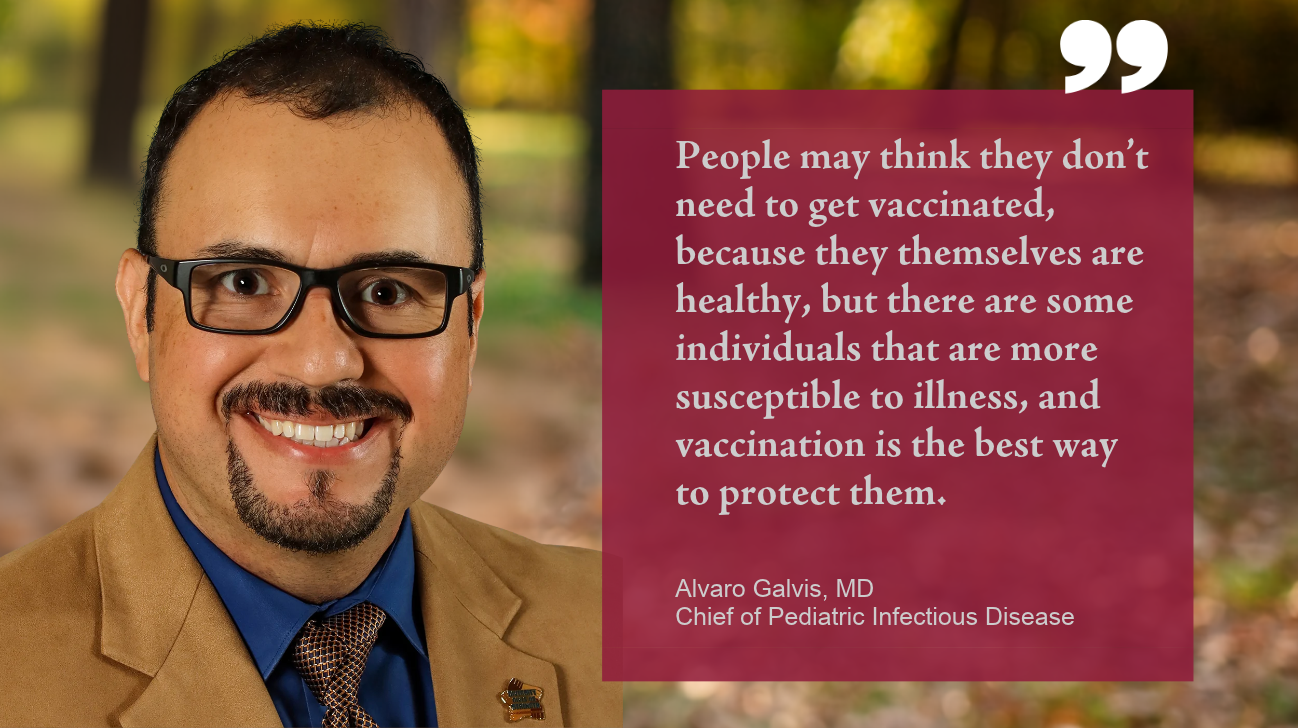
“People may think they don’t need to get vaccinated, because they themselves are healthy,” Galvis said. “But there are some individuals that are more susceptible to illness, and vaccination is the best way to protect them.”
Want to learn more about the measles, mumps, and rubella (MMR) vaccine? Watch this video and book an appointment with one of our pediatric experts.
More stories about: Children’s Hospital Children's health General Pediatrics
Related Articles