There are several treatment options to help hip pain without undergoing surgery
Hip pain can affect people of all ages — from young athletes to older adults navigating normal wear and tear.
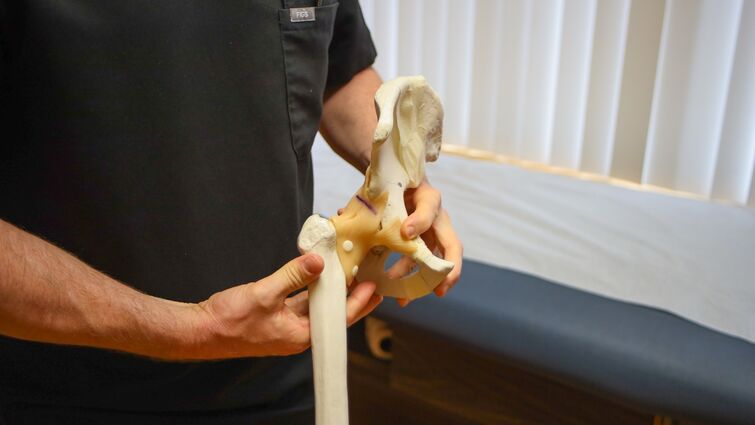
The hip refers to the ball-and-socket joint where the top of the thigh bone meets the pelvis. This joint allows the leg to move in multiple directions and supports much of the body’s weight during everyday activities.
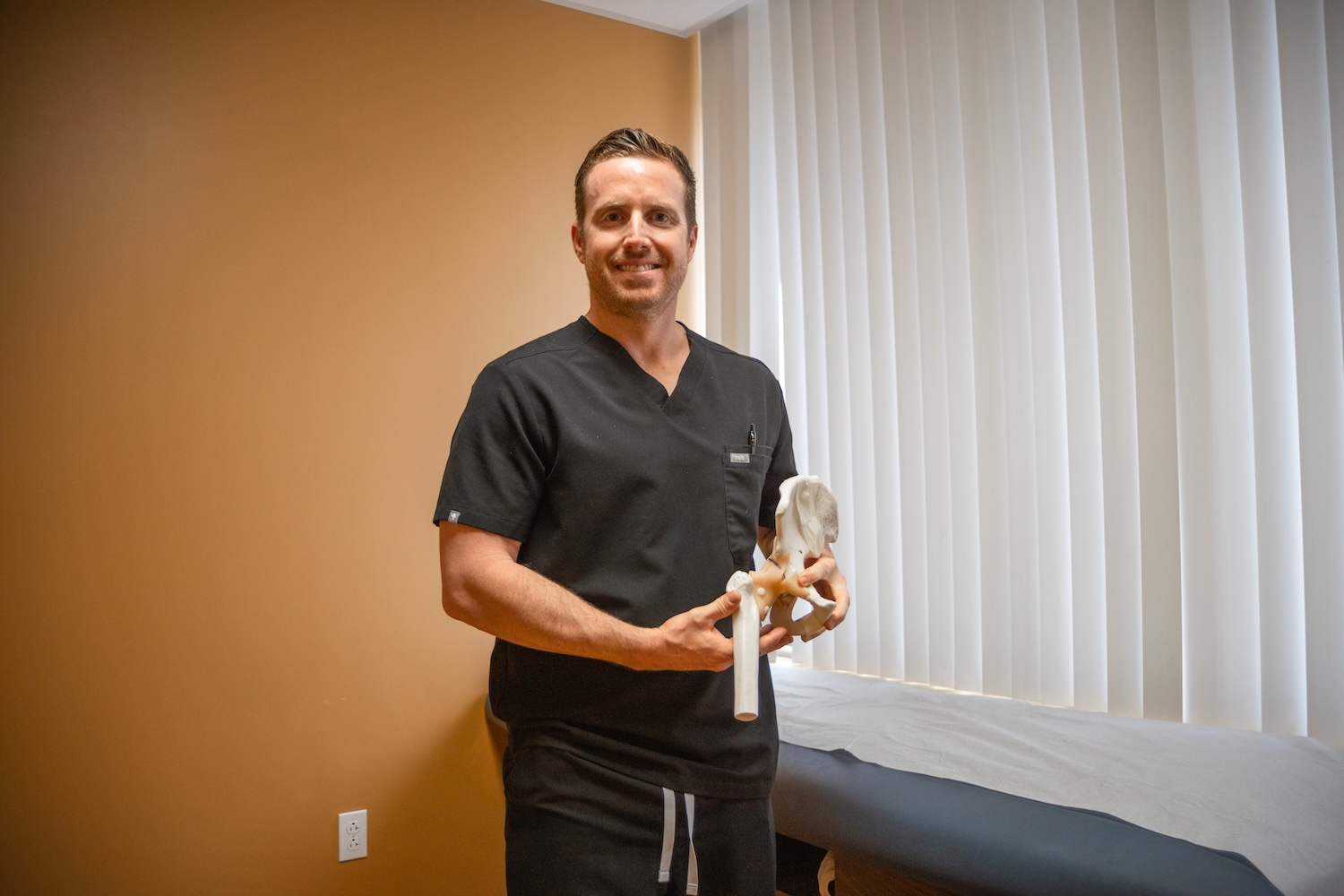
However, Michael Rose, MD, orthopaedic surgeon and sports medicine specialist at Loma Linda University Health, says that what people commonly describe as “hip pain” does not always originate from the joint itself.
“While many people think of the hip as a single bone, it is actually a complex joint supported by cartilage, muscles, and tendons, all of which can contribute to pain when injured or inflamed,” Rose says.
Understanding where hip pain comes from, including the type of injury causing the pain, is the first step toward effective treatment.
Common Causes of Hip Pain
Labral Tear
According to Rose, one of the most frequent reasons patients seek care for hip pain is due to a labral tear.
“The labrum is a ring of cartilage that surrounds the hip socket and helps stabilize the joint, he explains. “When this cartilage tears, it can cause deep pain, most often felt in the groin crease where the leg meets the pelvis.”
Labral tears typically develop over time, with many injuries occurring in their teenage years but experiencing delayed symptoms years or even decades later. Athletes and those who engage in repetitive workouts are the most common demographic with labral tears, although aging-related wear and tear can also play a role.
Patients with a labral tear often experience:
-
Deep pain in the front of the hip or groin
-
Discomfort when sitting for long periods
-
Pain during movements like squatting or lifting the knee
-
Symptoms that worsen with activity
Explore our joint replacement services to learn about treatment for severe joint pain, stiffness, or limited mobility.
Lateral Hip Pain
Pain on the outside of the hip, over the bony area on a person’s side, is another frequent complaint.
“For years, this was commonly diagnosed as bursitis. However, newer research shows that gluteal tendon injuries are often the true cause,” Rose says.
The gluteal muscles include three muscles in the buttock region. Tears or inflammation in the gluteus medius or minimus tendons can lead to:
-
Pain when lying on one side at night
-
Difficulty sleeping due to discomfort
-
Weakness when walking or climbing stairs
-
Limping in more severe cases
Doctors may also see hamstring injuries that create pain near the “sit bone” at the back of the hip, sometimes caused by gradual degeneration or sudden strain.
Arthritis and Aging
For older adults, the most common source of hip pain is osteoarthritis –– a gradual cartilage breakdown within the joint. As cartilage wears over time, bones rub against each other, producing pain and stiffness. Previous injuries, such as fractures or trauma, can also lead to post-traumatic arthritis later in life.
Diagnosing Hip Pain
For patients with hip pain, evaluation begins with an X-ray.
“The X-ray gives us a big-picture view,” Rose says. “It helps rule out fractures or serious joint problems.”
If symptoms persist after treatment, an MRI may be ordered to provide detailed images of cartilage, tendons, and soft tissue structures.
How Can I Treat Hip Pain Without Surgery?
Most hip conditions are initially treated without surgery, often starting with physical therapy (PT). PT offers treatment through targeted exercise and diagnosis by identifying movement or strength problems contributing to pain.
Additionally, the RICE method –– rest, ice, compress, elevate –– can help with short-term pain. However, rest does not simply mean avoiding movement.
“Doctors recommend modifying activities that cause pain. For example, a runner with hip pain should pause running while attending PT to focus on improving muscle strength and correcting movement patterns. Once strength improves, activity can gradually resume,” Rose says.
It’s also important to remember that the body has an incredible ability to heal if you give it time.
For those who have tried PT, the RICE method, and even anti-inflammatory medication and still experience hip pain, another option for non-surgical treatment is hip injections, such as cortisone injections and biological injections.
“Cortisone injections are a simple anti-inflammatory treatment that can calm irritated tissue and reduce pain,” Rose says.
Additionally, platelet-rich plasma, a biologic treatment created by spinning a patient’s blood to concentrate healing components called platelets, is another hip injection to help decrease pain and inflammation.
When to See a Doctor
Patients should seek evaluation if they experience:
-
Ongoing pain that does not improve
-
Night pain or difficulty sleeping on one side
-
Weakness or instability
-
A noticeable limp
Early evaluation helps rule out more serious conditions and can give patients more options for non-surgical treatment. For more information on non-surgical hip treatments, call us at 909-558-2808. You can also explore our orthopaedics services to learn more about your treatment options.
More stories about: Orthopaedics
Related Articles